Queen Creek Artificial Turf
Desert-Adapted Turf Installs in Queen Creek, AZ
Desert-adapted turf installs in Queen Creek, AZ built for triple-digit heat with heat-resistant fiber and reflective infill. Free estimates.
- 15+ Years local experience
- 500+ Projects completed
- Licensed & Insured
Serving Queen Creek and nearby communities.
Standard turf built for milder climates can soften or fade fast under a Queen Creek summer, where surface temps on dark turf can get genuinely uncomfortable underfoot. Queen Creek Artificial Turf selects fiber and infill specifically for desert heat rather than using whatever roll happens to be on the truck.
New-construction lots across town often sit on bare, sun-baked dirt with no existing shade or landscaping to buffer surface heat. Queen Creek Artificial Turf accounts for that exposure in both the base material and the infill choice so the finished yard performs through July and August, not just in spring photos.
What's included
What's Included with Desert-Adapted Turf Installs
- Typically included — heat tolerance planning, reflective base prep, heat-resistant turf laying, expansion gap allowance at seams.
- Optional — zeolite or cooling infill upgrade, shade-sail coordination near turf edges.
- Customer prep — clear the install area and flag any underground utility lines you're aware of.
Want a clearer scope?
Get a Free EstimateHow it works
How Our Desert-Adapted Turf Installs Process Works
 Step 1
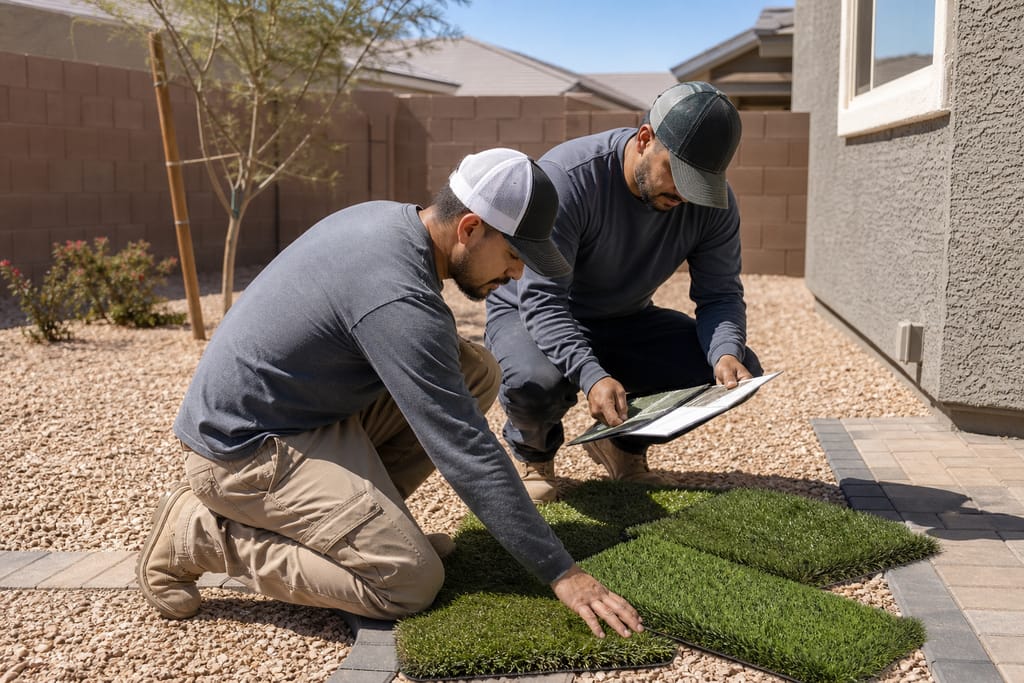
Heat tolerance planning
Turf is chosen based on sun exposure, not a one-size product for the whole yard.
 Step 2
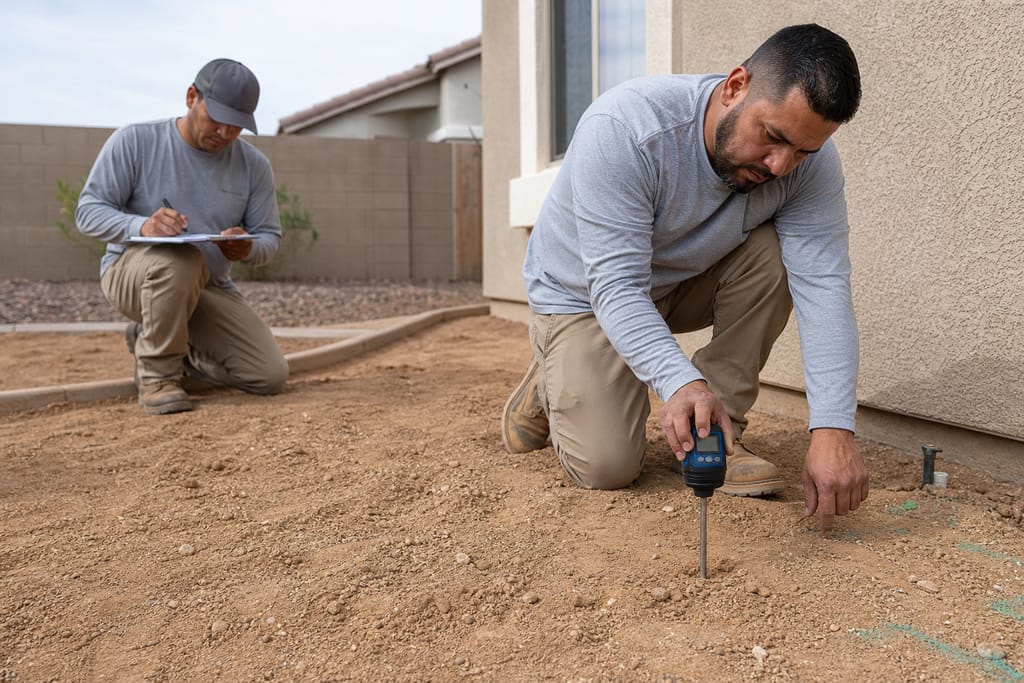
Soil moisture testing
Existing soil gets checked to plan drainage appropriate to desert conditions.
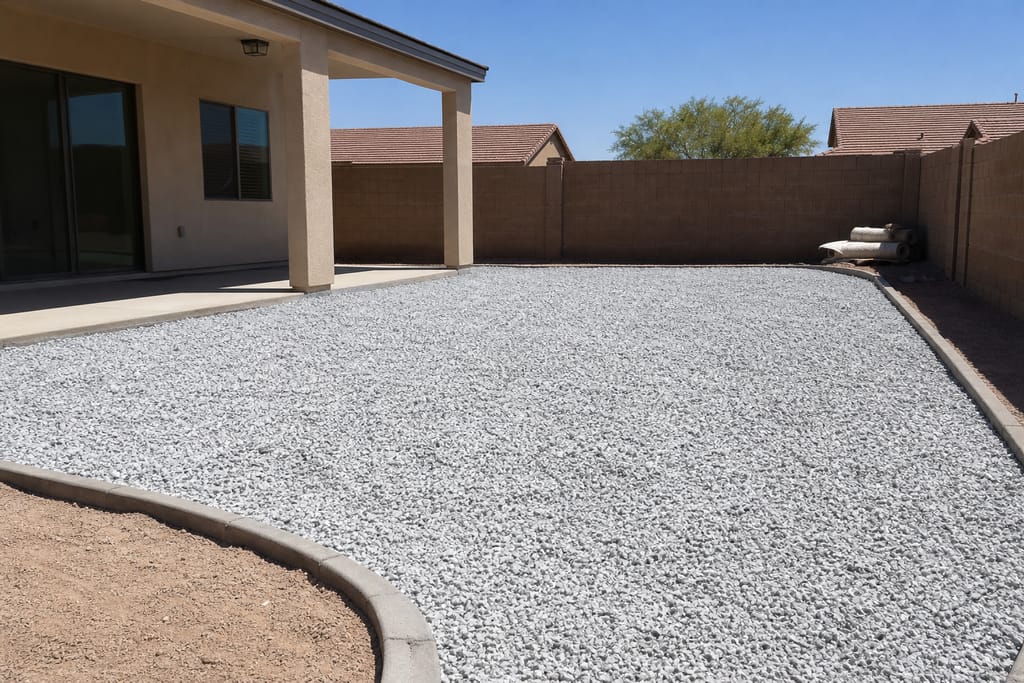 Step 3
Reflective base prep
Base materials are chosen to limit heat retention building up under the turf.
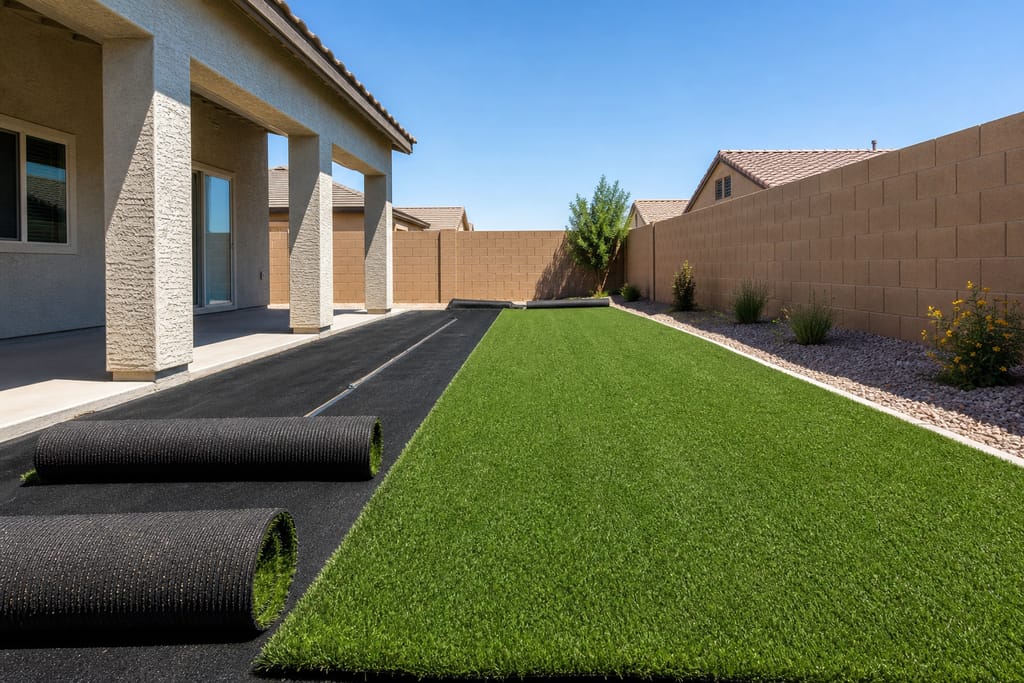 Step 4
Heat-resistant turf laying
Fiber rated for high heat is installed to resist softening in direct sun.
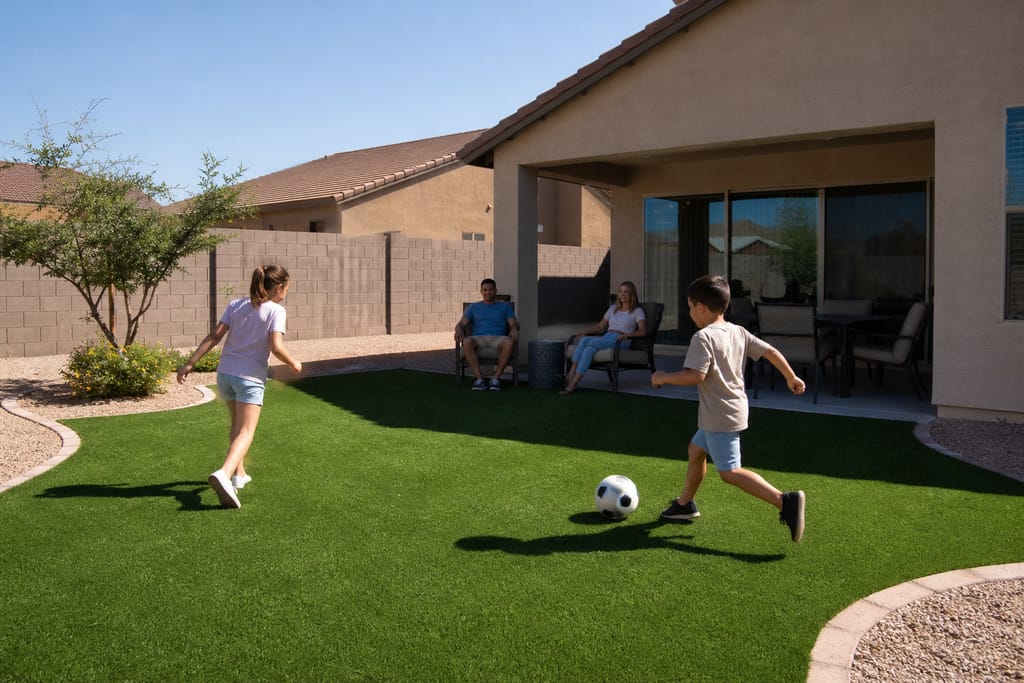 Step 5
Expansion gap allowance
Small gaps at seams absorb material expansion during the hottest months.
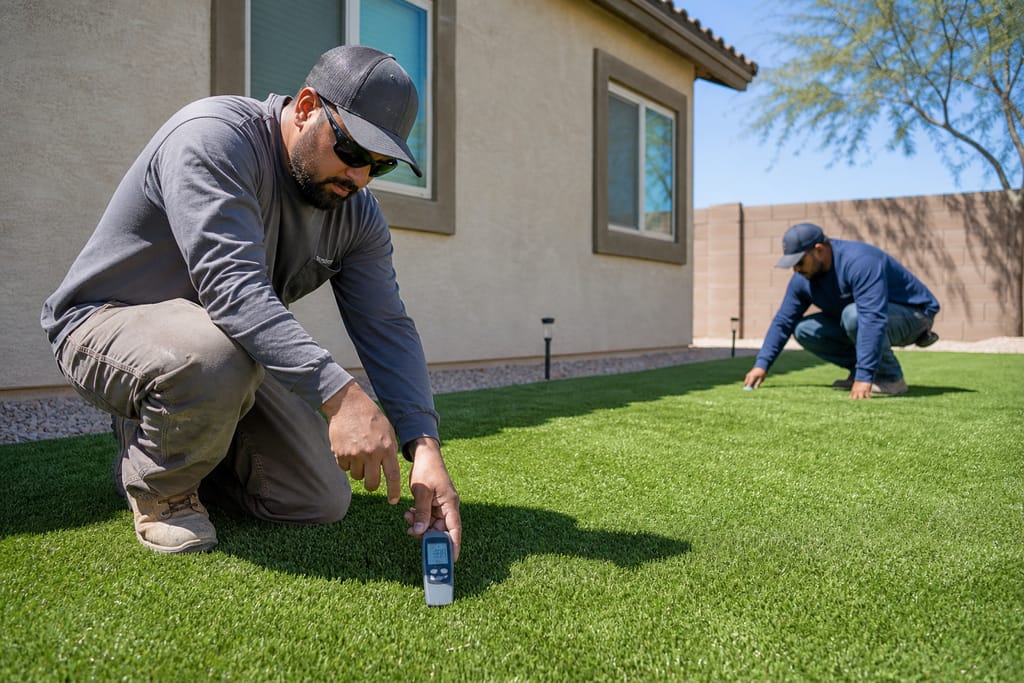 Step 6
Surface cooling check
The finished surface gets checked for temperature performance before walkthrough.
Materials
Materials and Methods for Desert-Adapted Turf Installs
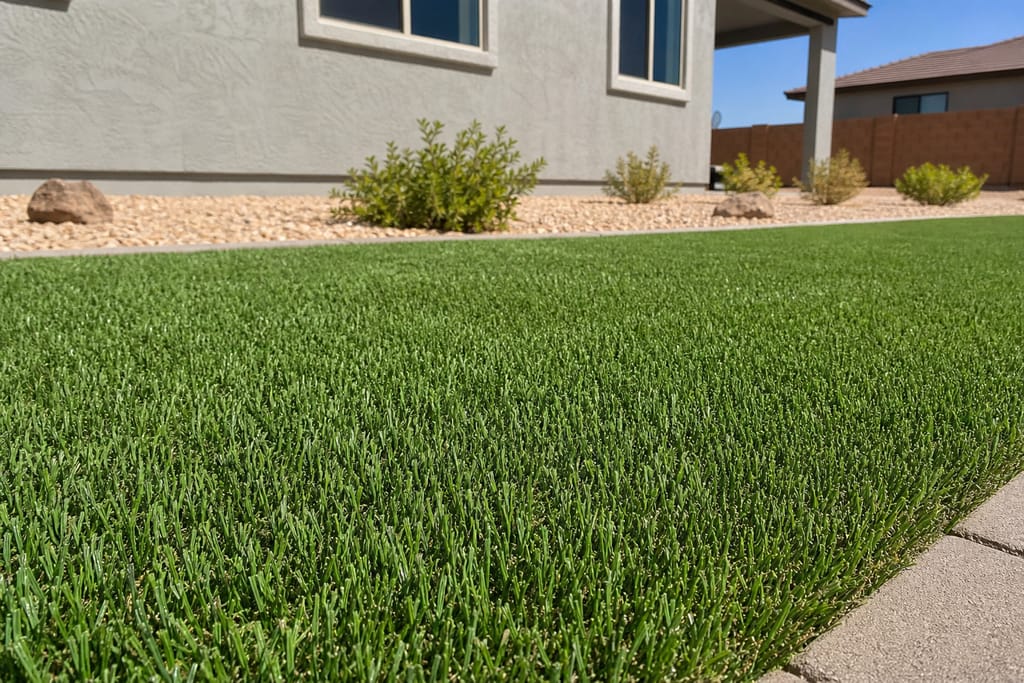
Heat-resistant turf fibers
Fiber engineered to resist melting and color fade through repeated 115-degree days.
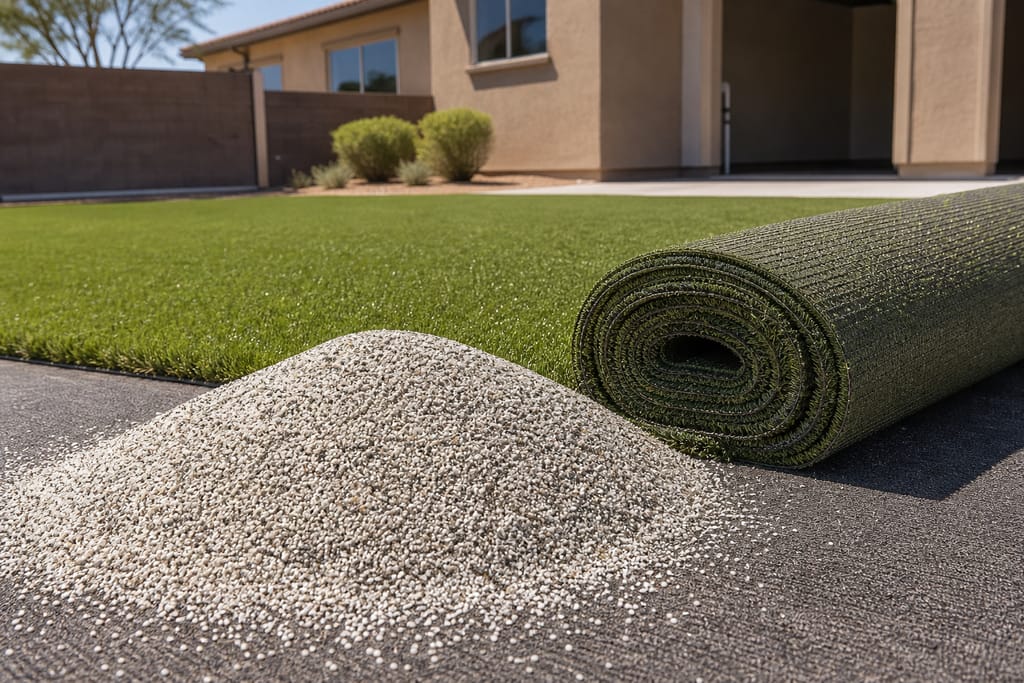
Reflective infill blend
Infill reflects heat rather than absorbing it, keeping the surface more comfortable.
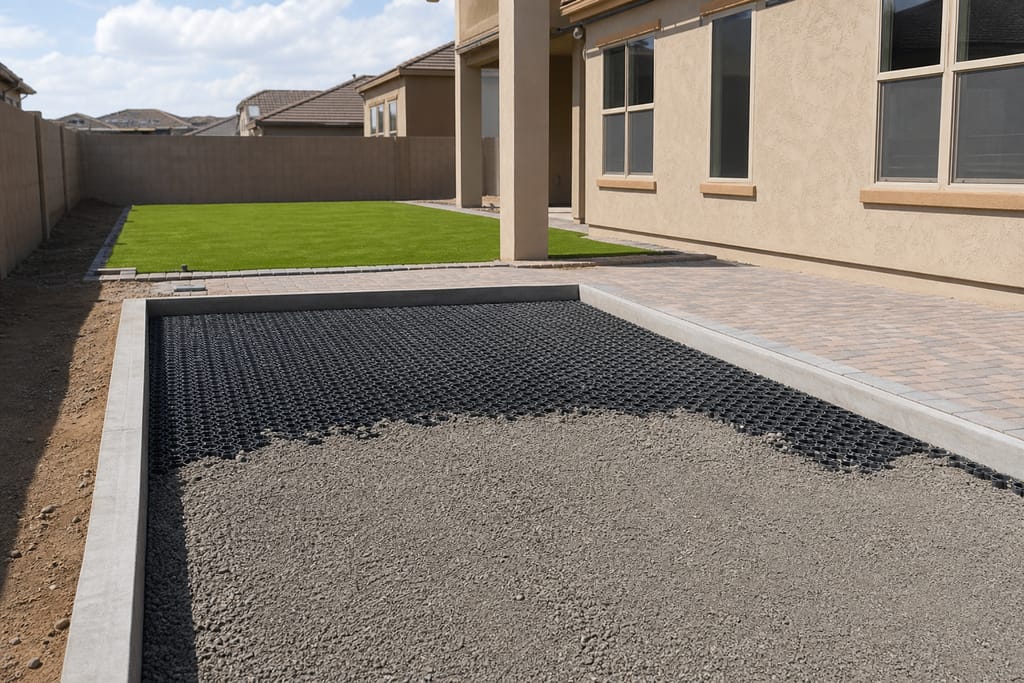
Drought-tolerant base layer
Base material stays stable in the dry, low-moisture soil common on new Queen Creek lots.
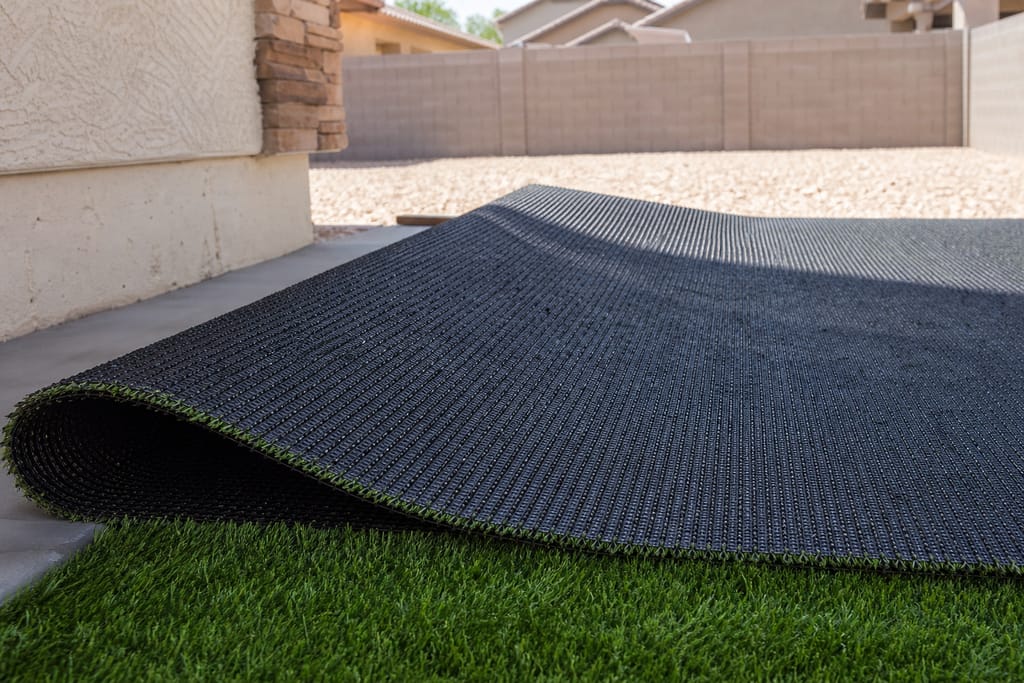
UV-protected backing
Backing treated against UV breakdown so it doesn't crack after a few desert summers.
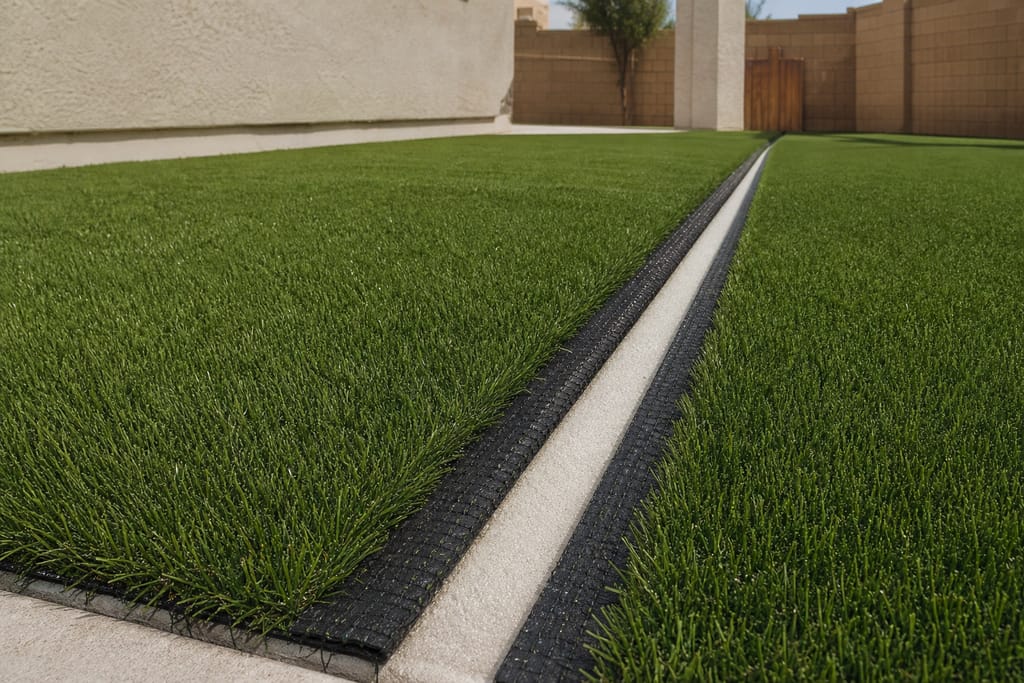
Thermal break seams
A seaming method that accounts for expansion keeps joints tight as temperatures swing.
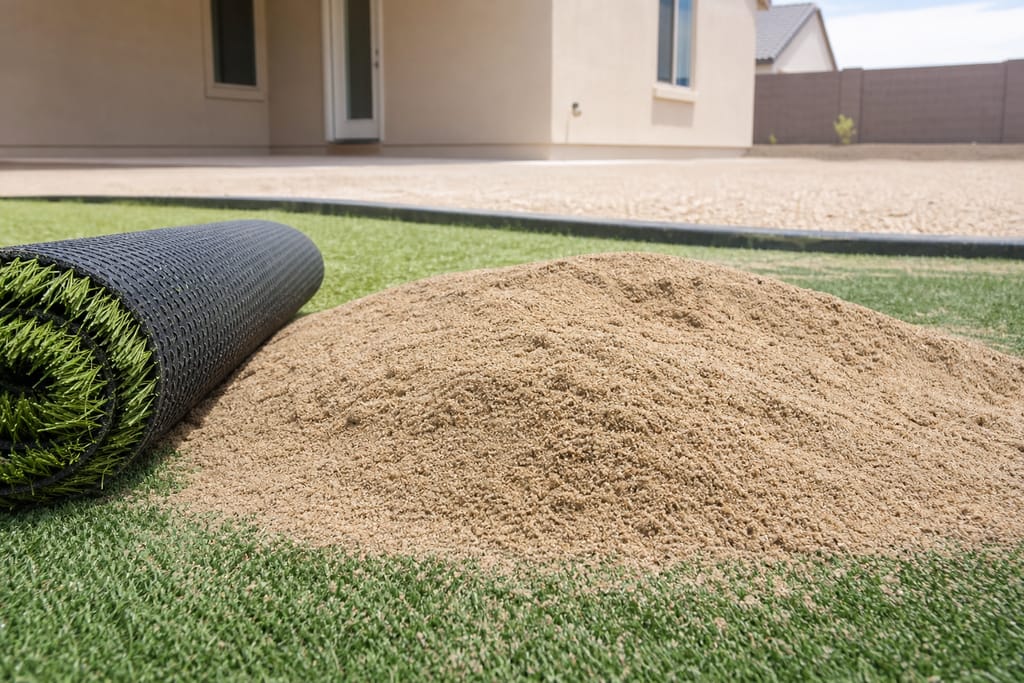
Sand-based filler
Sand filler adds stability while still letting heat dissipate from the surface.
Questions on materials?
Get a Free EstimateTimeline
How Long Does a Desert-Adapted Turf Install Take?
Most desert-rated installs run on a similar schedule to standard turf, just with more attention to material selection upfront.
- 01
Site evaluation
same daysun exposure and soil checked.
- 02
Base and reflective prep
1–2 daysgraded and compacted for heat stability.
- 03
Turf lay with expansion gaps
1 dayseams set with proper spacing.
- 04
Cooling check and walkthrough
same daysurface temp verified before sign-off.
Need a schedule that fits?
Get a Free EstimateBefore & after
Before and After Desert-Adapted Turf Installs
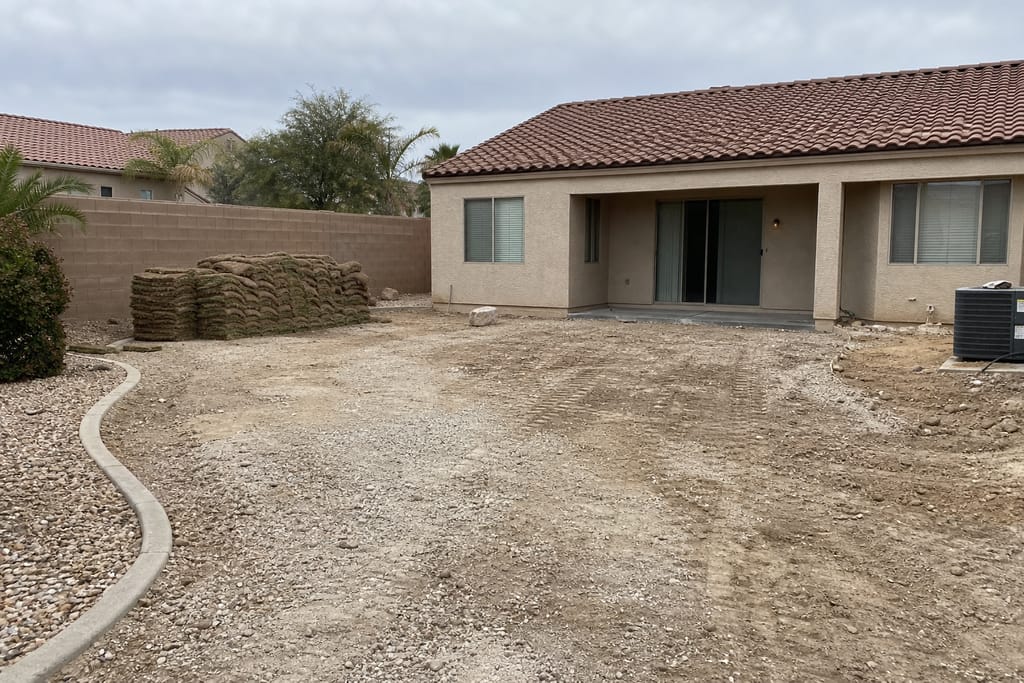
Before 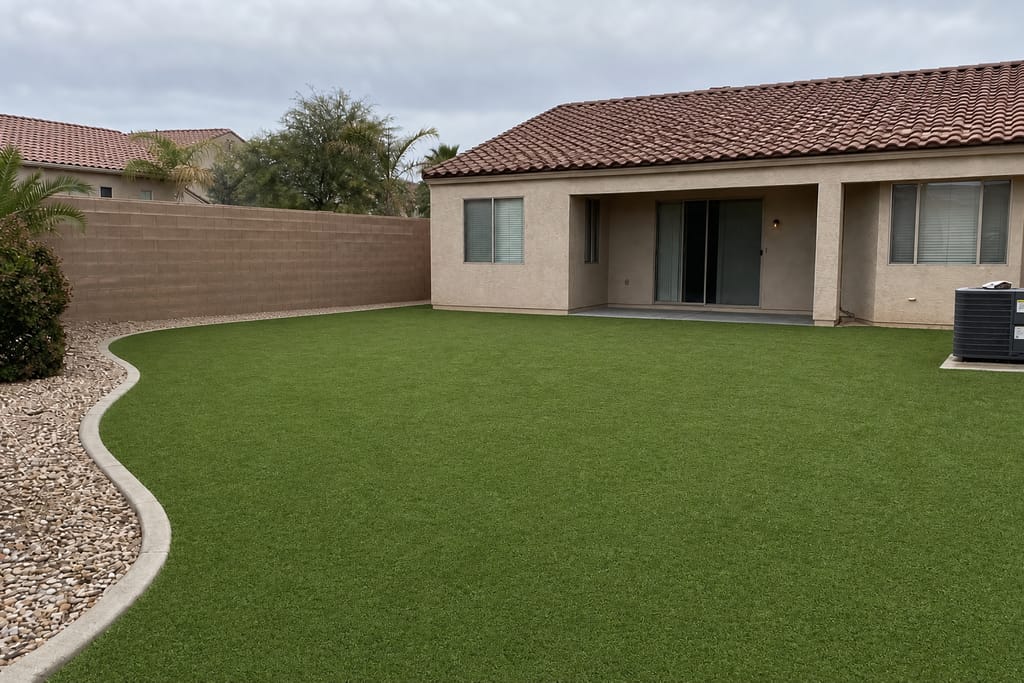
After
FAQs
Desert-Adapted Turf Installs FAQs
What makes turf "desert-adapted" versus standard turf?
The fiber, infill, and base materials are all selected for high heat tolerance and UV resistance rather than a generic cool-climate spec.
Does desert-adapted turf actually feel cooler?
Reflective and cooling infill options measurably reduce surface temperature compared to standard sand infill, though turf will still be warmer than shaded concrete in direct sun.
How much more does desert-adapted turf cost?
Expect a modest premium over a basic install for the upgraded fiber and infill, generally worth it for yards with full sun exposure most of the day.
How long does desert-adapted turf last in Arizona?
Properly chosen heat-rated turf typically holds color and texture for many years longer than a basic product in full desert sun.
Do I need a permit for a desert-adapted turf install?
It's a material and method choice, not a structural change, so standard permit rules for turf-over-dirt installs still apply.
Is DIY desert-adapted turf installation realistic?
Fiber and infill selection is easy to get wrong without climate experience, and base compaction for heat stability benefits from professional equipment.
Next step
Get a Desert-Adapted Turf Install Estimate in Queen Creek
Call Queen Creek Artificial Turf at (928) 589-6740 for a free estimate built around how your yard actually sits in the sun.
More services
Other Artificial Turf services
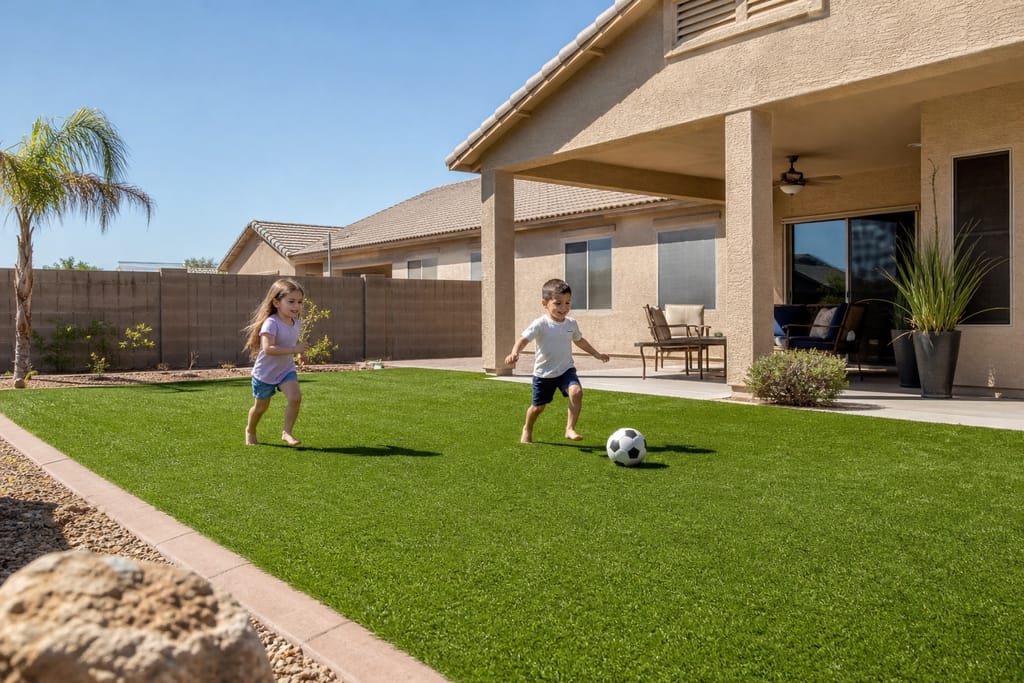
Artificial Turf Installation
Artificial turf installation in Queen Creek with desert-rated base prep, seaming, and infill. Free estimates, written scope.
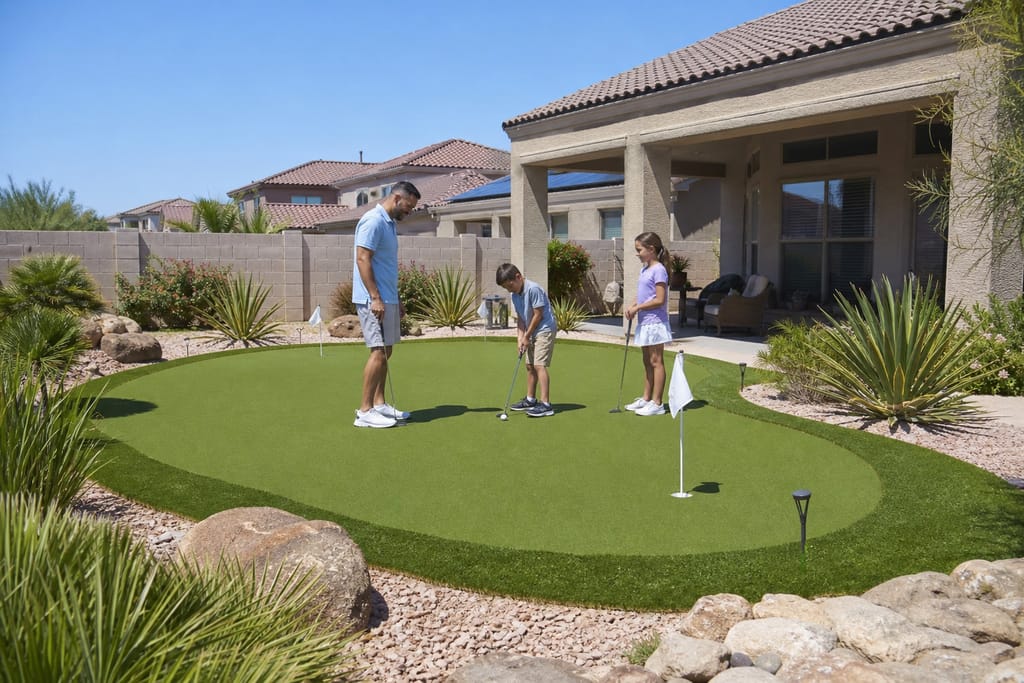
Putting Green Installation
Putting green installation in Queen Creek, AZ with contoured sub-base, short-pile turf, and realistic break. Free estimates.
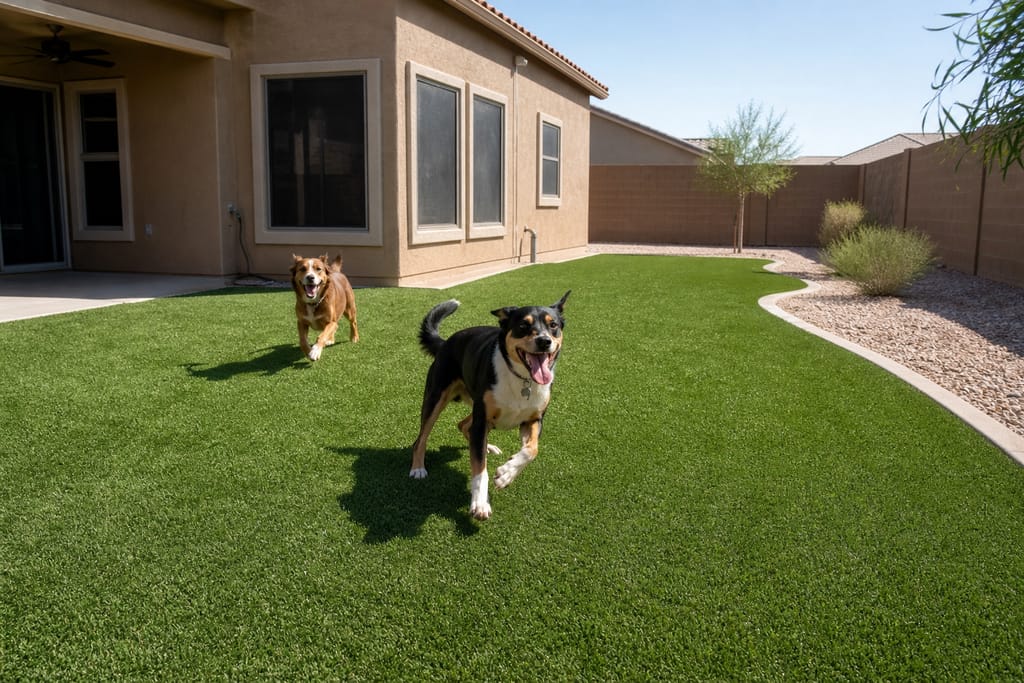
Pet Turf Installation
Pet turf installation in Queen Creek, AZ with drainage backing, odor-control infill, and reinforced seams. Free estimates.
Ask about Desert-Adapted Turf Installs
Tell us about the project and how to reach you.